** 9/12/10 - 9.02am - by James Gerrish**
The market edged higher once again last night with some continued support in the commodities markets on the back of a drop in the USD. We've continued to see weakness in the bond market which has increased yields on the 10 year note to 3.29% - up from a cycle low of 2.35% - pretty impressive move so far.
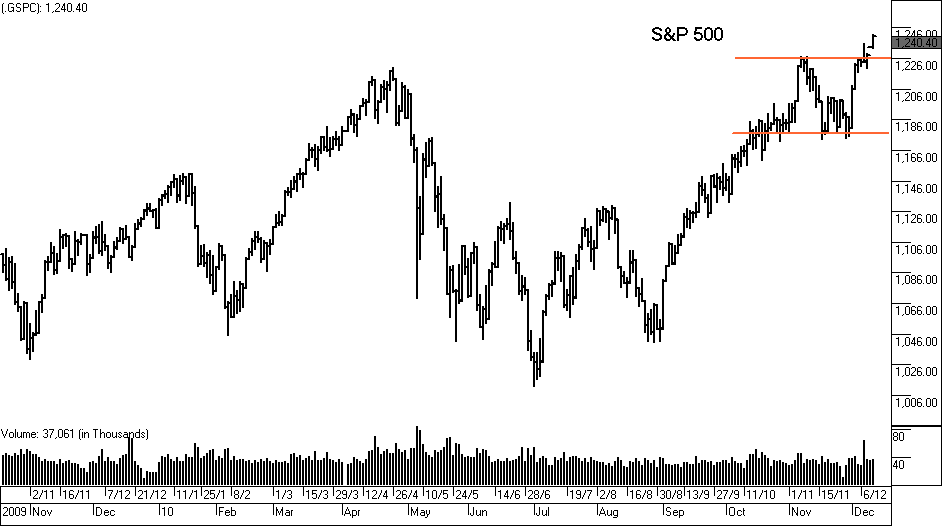
It shows that money is coming out of the bond market and given the US equity market has continued higher, you'd conclude that some of its been filtering into risk assets such as equities and commodities. The impact of US Bond Purchases through QE2 (Treasury buying) has been fairly obvious in the equity market. On average over the last 2 year period, the days the Fed has stepped into the Bond market, equities have risen an average of 4 times the amount as the days when the Fed has been on the sidelines.
So at the moment, the Stimulus seems to be working with US economic data improving, European debt issues seem to have gone off the front page and this is being supported by continued strength in Chinese data. We saw inflation hit is a 28th month high on Friday in China (largely driven by food prices) however the Chinese Central Bank held off raising rates on Saturday.
Locally, the major emphasis has been on the Banks with the Senate enquiry into the banking sector continuing today. The Government announced new reforms yesterday and from my perspective, it’s a positive for the big banks (not exactly what Swanny was hoping for!!!)
The main take outs are:
- Banking exit fees abolished from 1 July 2011. This is a negative for CBA and WBC who still have the fees in place while ANZ and NAB had already abolished the fees. Is also likely to be a positive for Mortgage Brokers due to an uptick in refinancing. Watch Mortgage Choice (MOC)
- Fact sheet for home owners - similar to a PDS that your broker provides you about the services + costs involved
- The ability for Banks to now issue covered bonds - A Covered Bond is a secured form of borrowing where the investor has a claim on both the institution and its assets including deposits. This means that Aussie banks can fund more of their book domestically reducing reliance on international funding markets. If you recall, this was the main reason banks gave for increasing funding costs and pumping up mortgage rates above and beyond the RBA.
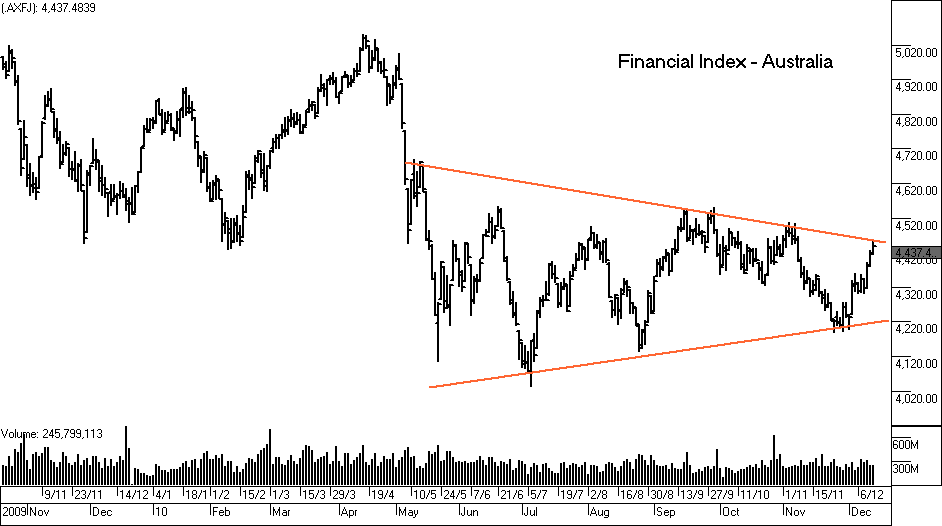
All in all - I think these reforms are pretty subdued and will be bullish for the banks - particularly the majors. If you look at the chart of Financial Sector, it looks set to break out.
 I’ll be on SKY BUSINESS today at midday
