**04/11/10 - 8.59am - by James Gerrish**
The US Federal Treasury announced plans for $600 billion worth of bond purchases overnight which will be rolled out over the next seven months. This was the QE2 program that had been flagged for the past few months causing the US market to rally more than 12% in that time. The amount was broadly inline with expectations of $500 billion over six months so the market reaction was fairly subdued (after some intra session volatility). I was of the belief that the Fed would have leaked some fairly accurate information to the market prior to the announcement to avoid any destabilization, and that now appears to have been the case.
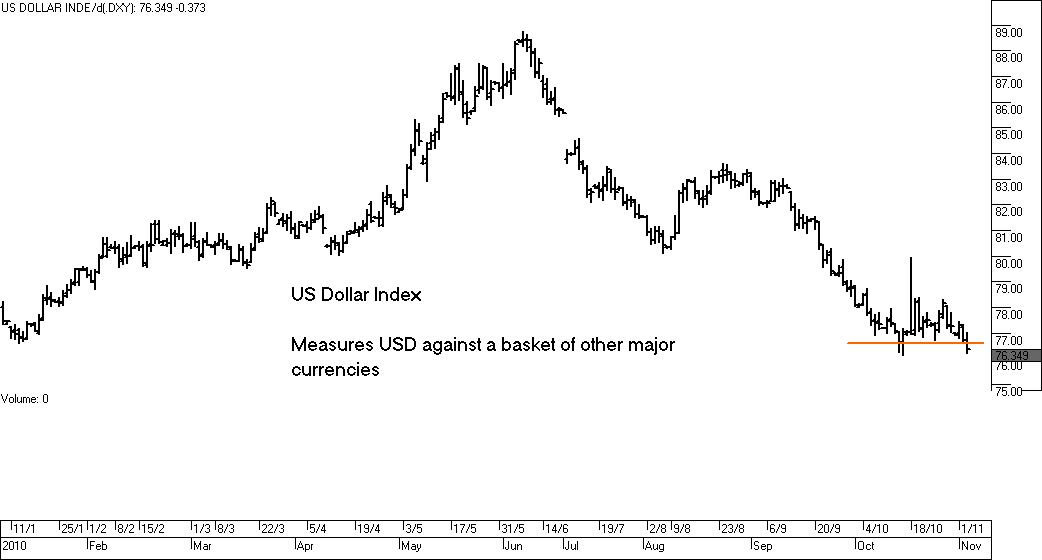
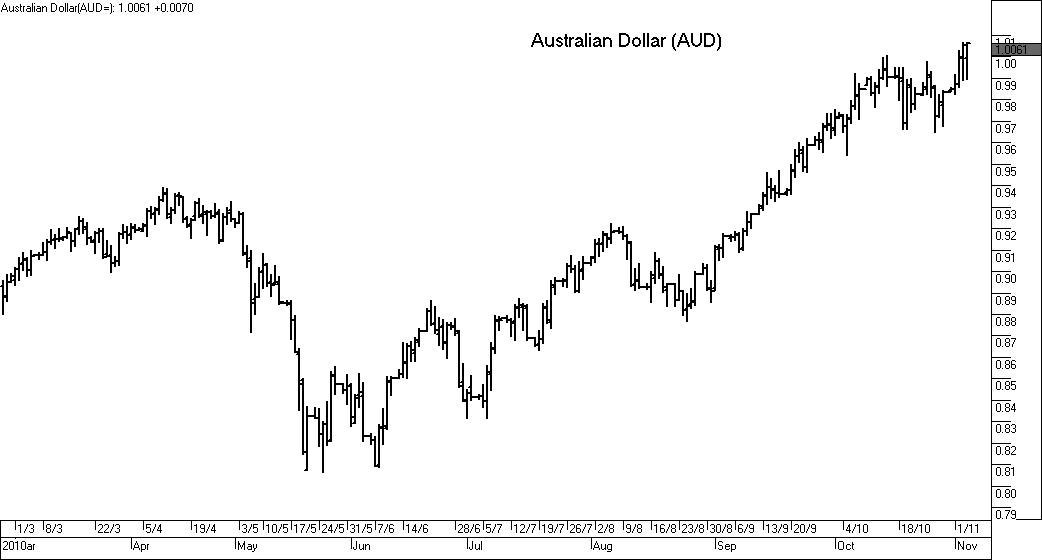
The move to print money prompted sellers to come back into the USD and push the currency lower. This filtered into a higher Aussie Dollar which was trading firmly above parity. On the market overnight, the DOW JONES added +26 points or +0.24% to close at 11215. In London, the FTSE 100 closed down -8 points or -0.15% to 5748. Locally, SPI FUTURES are suggesting a rise of 8 points when trading kicks off this morning. Much of today’s move will be dependent on the reaction to BHP, with its bid for Potash Corp being rejected overnight (30 days to appeal). I would expect this to be a positive for the BHP share price.
We also had the Mid Term elections in the US overnight with the Democrats suffering a large swing against them in the House of Reps. They did hold the Senate so we got what the market was widely expecting. There was so much anticipation about last night and it really has been the focal point for the market over the last few weeks. Both events came in-line with expectations so no doubt the market will now turn to economic data to drive direction.
One of the more interesting aspects of the QE2 program announced last night was the Fed Reserve suggesting that it will remain flexible with the amount and time frame of the package. The announcement last night was used more as a PR stunt to give the market what it was after but the reality is, they can amend the level and timing of the roll out depending on the flow of data.
The economic releases in the US have actually started to improve and I'm sure the Fed is conscious of this. Last night for instance we saw private sector employment top expectations (Non Farm Payrolls due out on Friday), US factory orders rose above expectations while a measure of non-manufacturing activity also beat consensus. We really need to see employment start to improve and some upward move in prices - These are the main targets for the Feds stimulus program.
